
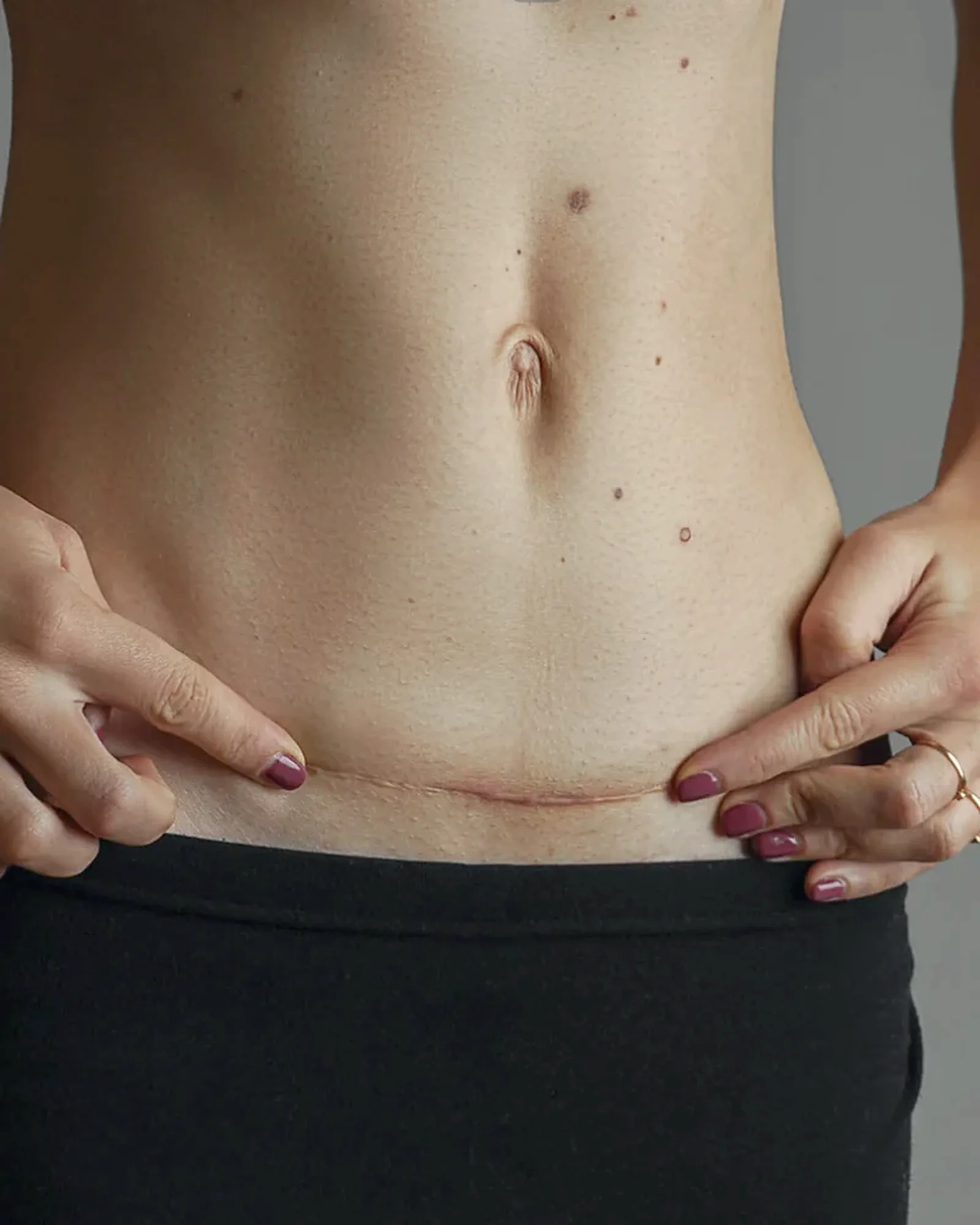
Yes. A C-section scar can still respond to treatment months or even years after surgery. Scar tissue stays living tissue, so gentle, targeted work can often improve tightness, numbness, tenderness and the “shelf” above the scar, no matter how old the scar is.
Why an old scar can still cause problems
During a C-section, several layers of tissue are cut and then heal together. Sometimes those layers stick to one another as they heal. That can leave the area feeling:
- tight, pulling or “stuck” when you stand tall, twist or exercise
- numb, tingly or oddly sensitive to touch or clothing
- puffy, with an overhang or “shelf” above the scar
- linked to low back pain, pelvic pain, bladder urgency or pain with sex
Many people are told this is just how it will feel from now on. Often, it doesn’t have to be.
What scar release involves
At Revival Physio, a pelvic floor physiotherapist first assesses the scar and the tissue around it, along with your breathing, core and pelvic floor. Treatment is gentle and can include:
- hands-on scar and soft tissue release
- cupping to lift and mobilise the tissue
- the Dolphin Neurostim, a gentle microcurrent device used on points around the scar
- simple self-massage you can do at home between visits
When is it safe to start?
Hands-on scar work starts once the incision has fully closed and healed and your doctor or midwife is happy with your recovery, usually from around six to eight weeks after birth. There is no upper time limit, so a scar from five or ten years ago can still be treated.
Do I need a referral?
No. In Ontario you can book directly with a physiotherapist. Visits are covered by most extended health plans that include physiotherapy.
If your scar feels tight, numb or sore, C-section scar physiotherapy at our Leaside clinic is a good place to start.